
涡流检测技术
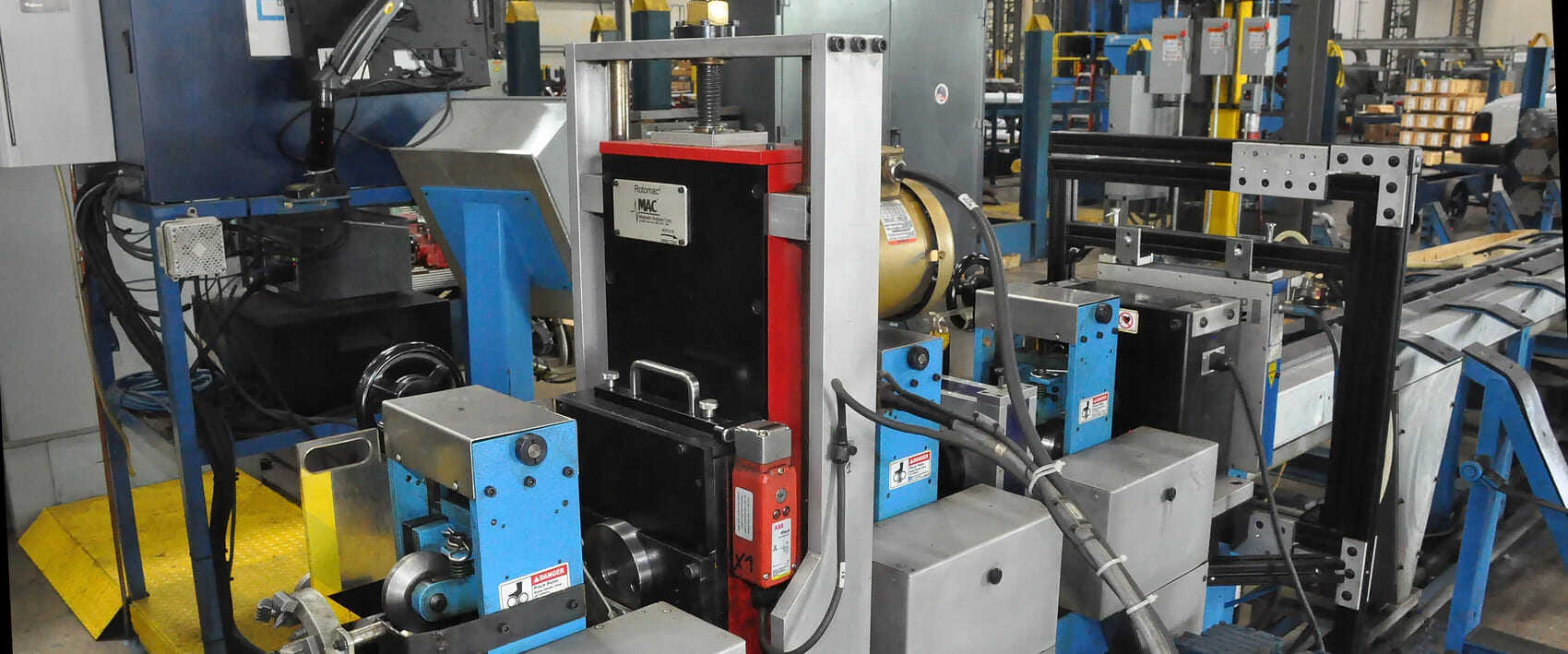
MAC® 的涡流检测 (ECT) 系统包含基于计算机的检测仪器以及两种 ECT技术的检测探头:穿过式和扇形探头,旋转式探头。
涡流检测技术
MAC® 的涡流检测 (ECT) 系统包含基于计算机的检测仪器以及两种 ECT技术的检测探头:穿过式和扇形探头,旋转式探头。
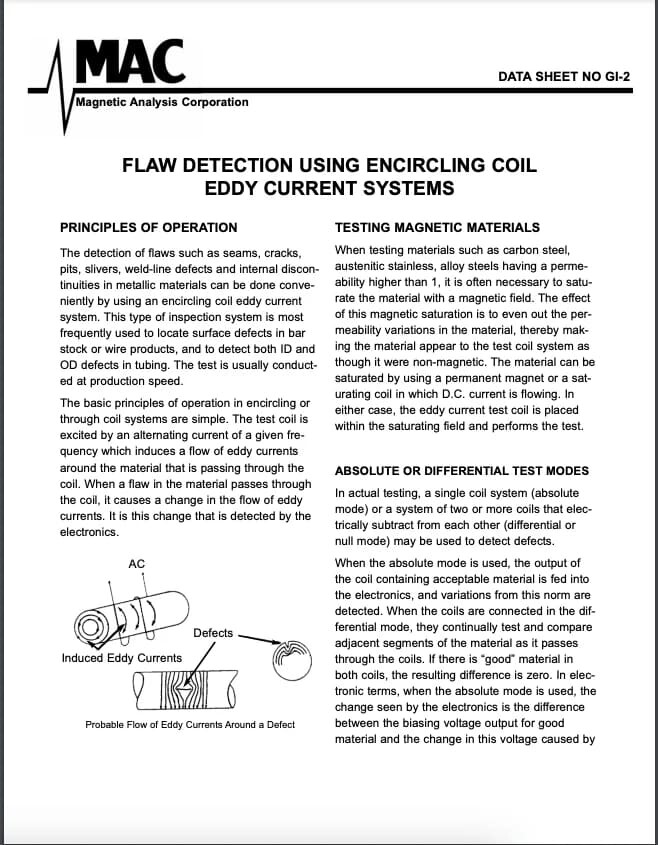
穿过式和扇形涡流检测探头是这样运行的:
- 被检产品通过或贴近被交流电激励的探头。
- 穿过式探头会在产品一周感应出涡流,扇形探头会在探头下的区域感应出涡流。
- 短小、断断续续的异常,以及缺陷会引起涡流场的变化,涡流仪器会检测到这种变化。
下载涡流技术手册
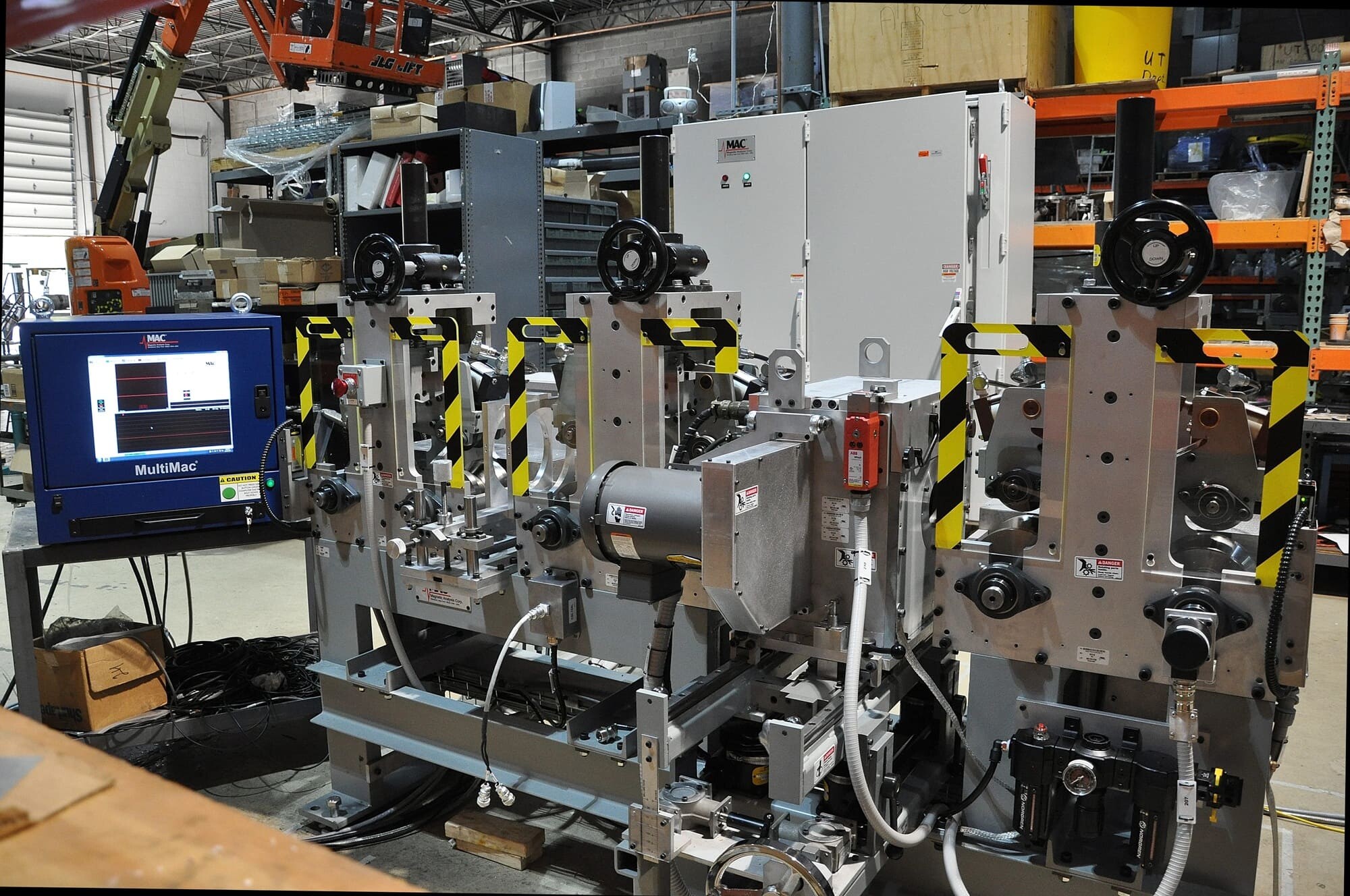
旋转探头式涡流检测是这样运行的:
- 被检产品纵向通过旋转探头,形成螺旋式扫查轨迹。
- 当探头扫查到缺陷时,会检测到感应涡流的变化。
- 可以被一致地检测到的最小缺陷长度是探头旋转速度以及材料通过速度的函数。
- 旋转检测可用于检测磁性和非磁性线材或棒材表面裂缝类缺陷。
旋转探头式涡流检测是这样运行的:
- 被检产品纵向通过旋转探头,形成螺旋式扫查轨迹。
- 当探头扫查到缺陷时,会检测到感应涡流的变化。
- 可以被一致地检测到的最小缺陷长度是探头旋转速度以及材料通过速度的函数。
- 旋转检测可用于检测磁性和非磁性线材或棒材表面裂缝类缺陷。
穿过式或扇形涡流探头的典型应用包括:
- 在线或离线检测磁性和非磁性线材、棒材或管材表面或一些近表面短小缺陷。
- 检测焊管焊区或整个圆周范围内的内表面或外表面短小缺陷。
- 检测其他截面一致的材料,如截面为正方形、矩形、六边形或圆形的材料。
- 检测小直径线材或管材的短小缺陷。
- 检测单股或多股绝缘电线和电缆的焊点和断点。
- 当检测碳钢、奥氏体不锈钢及其他磁导率大于1的合金钢时,通常需要使用磁场对被检产品施加磁饱和。否则磁导率会影响涡流探伤的效果。磁饱和线圈用于对涡流探头区域提供饱和磁场。
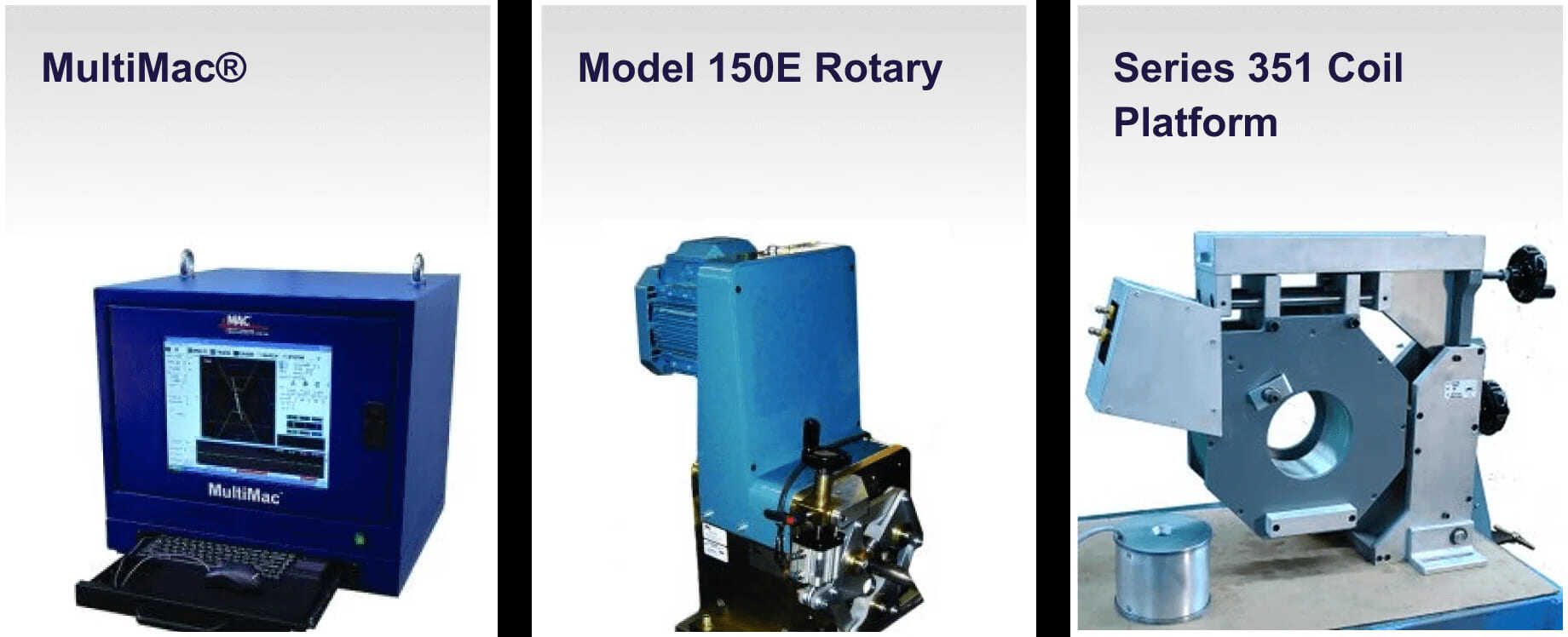
旋转探头式涡流检测的典型应用包括:
- 检测冷拔线材或定尺棒材表面裂缝类的缺陷。
- 在线检测连续线材的运行,如线材拉丝、零件成型、再绕、矫直和切断等。
- 检测定尺长度的材料,通常为离线检测。
- 检测零件,如小轴、轴承、活塞销上的纵向表面缺陷。
- 涡流技术可用于检测铁磁性和非磁性材料。
相关资源
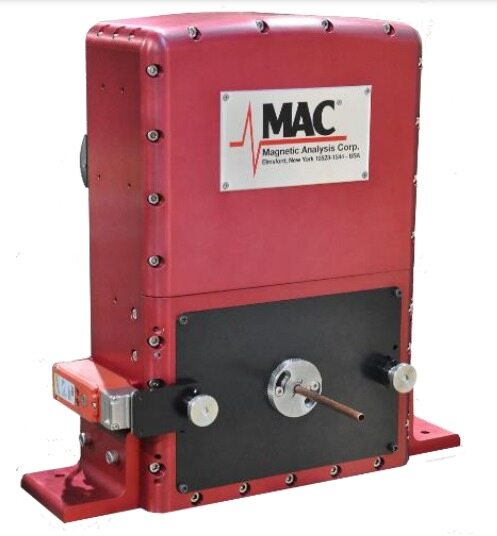
The new high-speed Rotomac® eddy current tester for small diameter wire and rod from Magnetic Analysis Corp. (MAC) received strong interest from wire 2016 attendees.
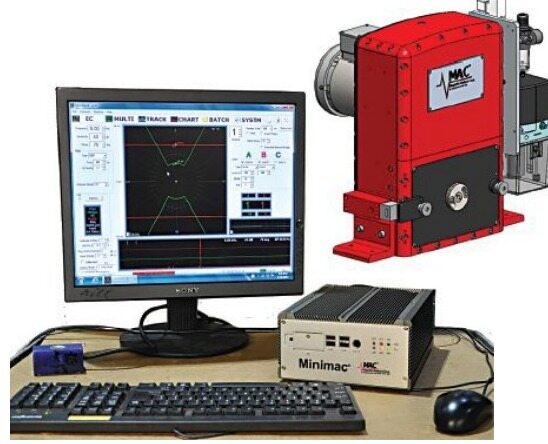
The high-speed Rotomac® rotary eddy current tester for small diameter wire and rod is available from Magnetic Analysis Corp., Elmsford, NY, USA. The Rotomac eddy current tester is designed for ease of use and superior performance in detecting longitudinal, seam-type defects in small diameter wire and bar from 2 to 20 mm diameter.
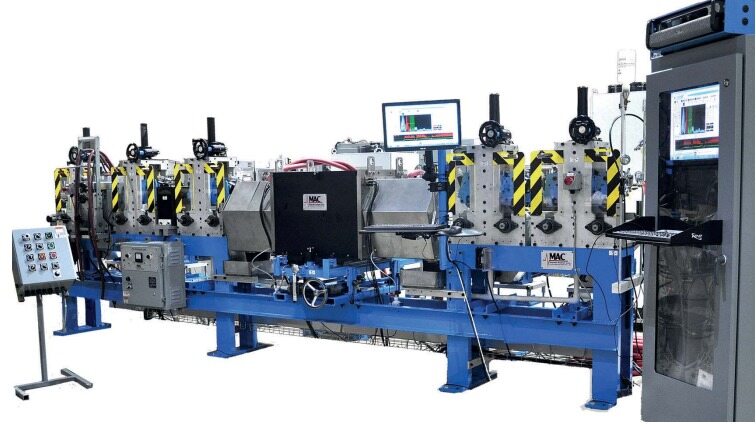
Magnetic Analysis Corp. (MAC) has supplied an ultrasonic/eddy current multi-test system to inspect cold-drawn welded tube used in the production of shock absorbers at a Monterrey, Mexico plant operated by Prosankin (formerly A-4C-Sankin).
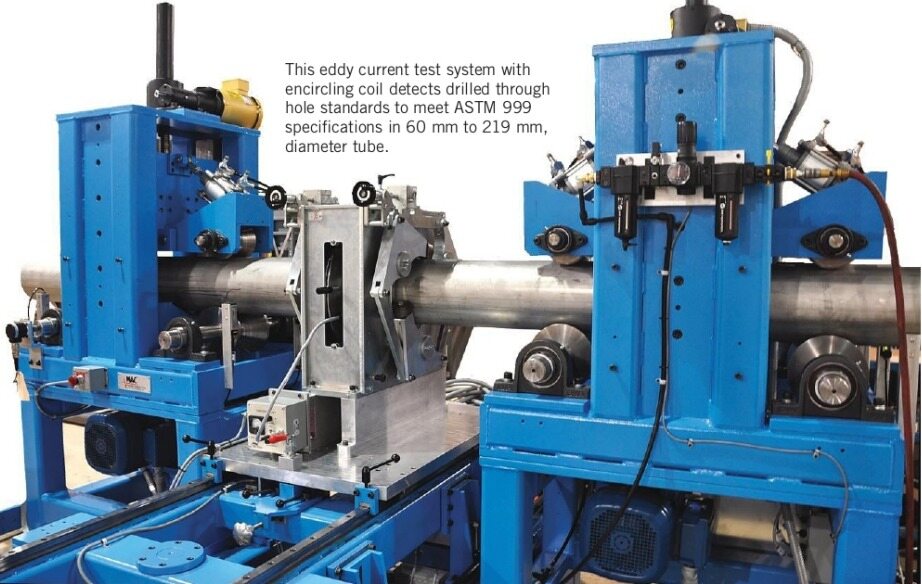
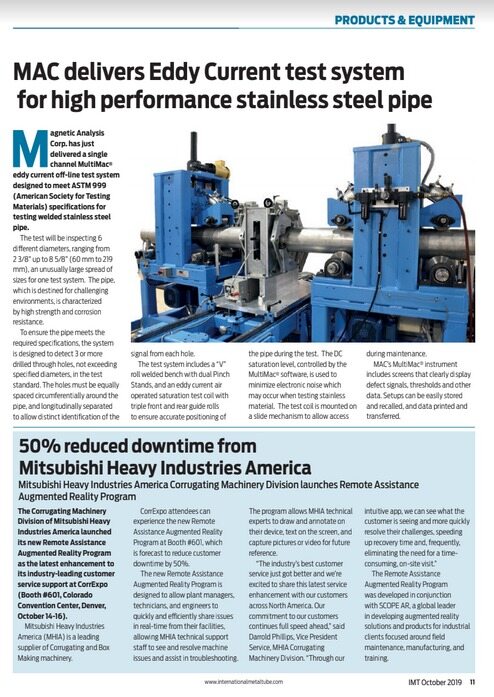
Magnetic Analysis Corp. has just delivered a single channel Multimac eddy current off-line test system designed to meet ASTM 999 (American Society for Testing Materials) specifications for testing welded stainless steel pipe.
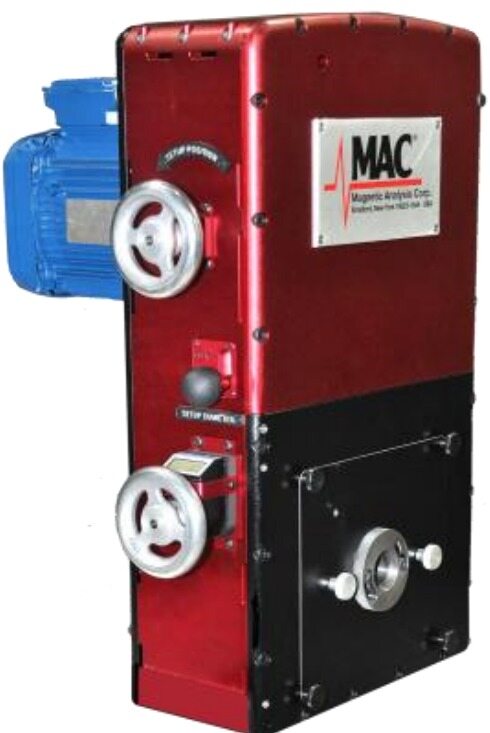
Magnetic Analysis Corp.’s new 40mm Rotomac® Eddy Current Rotary offers enhanced convenience for detecting seam-type surface defects in cold-drawn wire, cut-length bar stock, and parts forming. A single-handle external probe adjustment allows quick, safe dimensional changes without opening the rotary.
Since the development of eddy current testing in the early to mid-1900s this method has been used to detect defects and properties of many types of metals. The most common applications are testing tubular products for transverse defects, testing bar or wire products for longitudinal surface defects, and testing parts for defects and properties such as hardness.
我们的产品
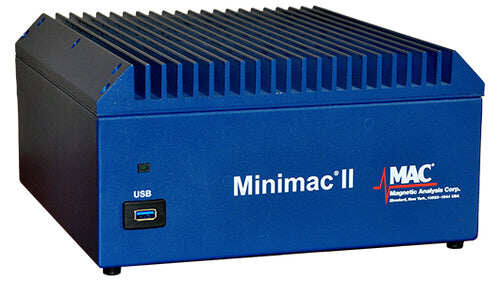
描述 Minimac® II 可使您充分利用涡流检测技术灵活、通用的特点,为管材、棒材、线材和零部件提供高性能同时具备经济优势的检测。单通道或双通道的全数字化运行,可配置为差动式、绝对式或任意组合。 检测表面和一些近表面较短的缺陷,如管材、棒材、线材和零部件中的折叠、线状缺陷和裂纹等。 检测长而连续的缺陷。 检测焊缝区域内外表面较短缺陷。 检测磁性和非磁性材料。 最多两个通道,可配置为差动式、绝对式或任意组合。 使用标准的检测探头,最大检测速度可达 20 米/秒;宽间距探头可实现更高的检测速度。 在穿过式探头应用时可使用一个或两个通道。 在旋转式探头应用时可启用第二个通道。 标配一个通道,并具备启用第二个通道的选项。 MINIMAC® II 单通道/双通道数字式涡流探伤仪 高性价比、单通道/双通道、全功能数字式涡流探伤仪,用于管材、棒材和线材缺陷检测 检测技术 涡流检测技术 MAC ® 的涡流检测 (ECT) 系统包含基于计算机的检测仪器以及两种 ECT技术的检测探头:穿过式和扇形探头,旋转式探头。 查看更多 下载产品手册 相关产品 Nothing Found
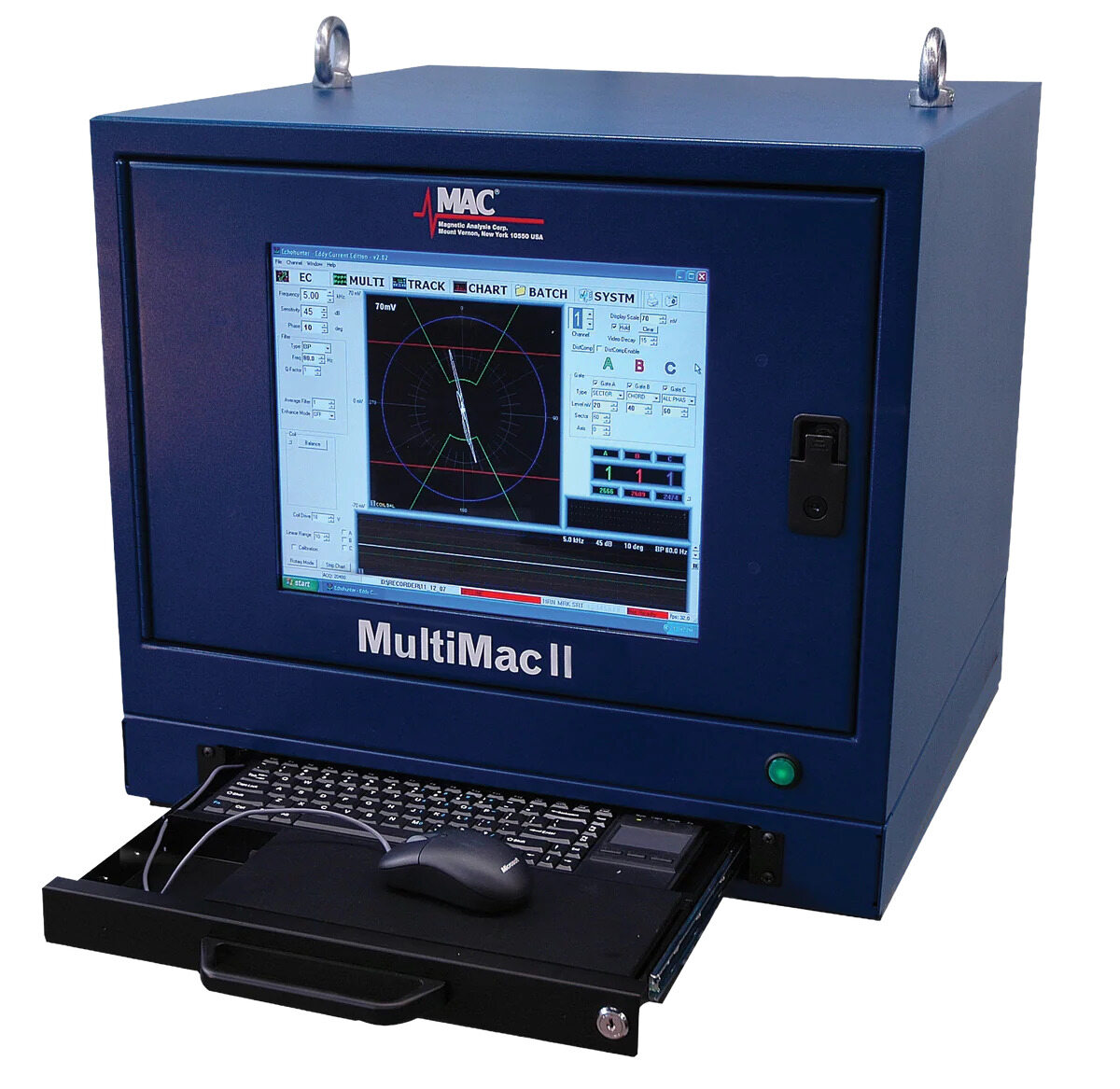
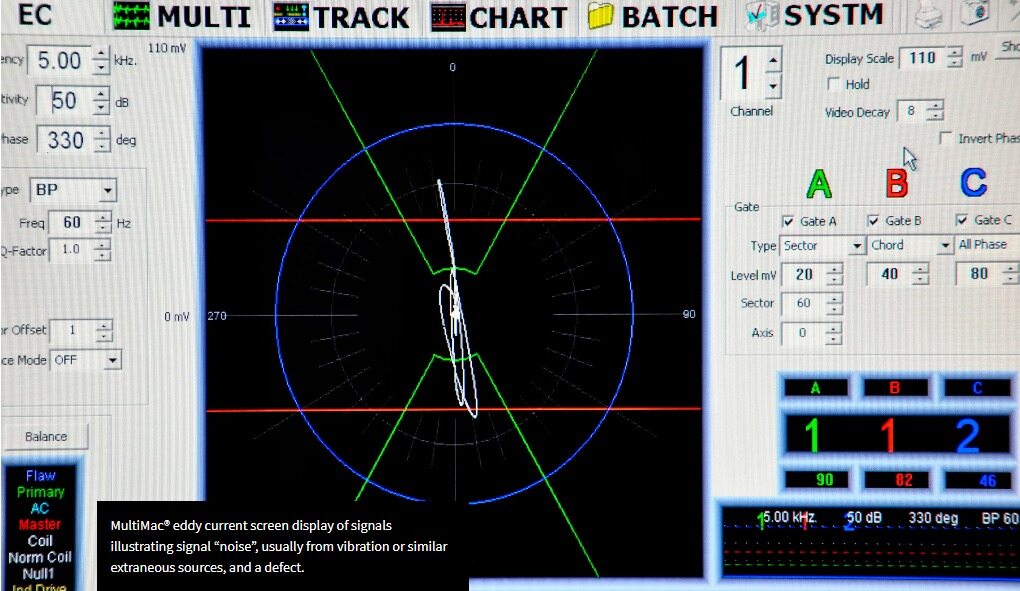
描述 用于管材、棒材和线材涡流检测 可连接穿过式线圈、扇形线圈或旋转式探头。 最多8个检测通道,差动式或绝对式可任意组合。 检测管材、棒材和线材表面短小缺陷以及一些近表面缺陷。 检测焊管焊缝区域内外表面短小缺陷。 使用旋转式检测探头长而连续的表面缺陷。 检测磁性或非磁性材料。 提供广泛的检测频率:1KHz 至 6MHz。 通用的 MultiMac® 涡流探伤仪可以同时连接涡流探头和旋转探头 – 使用一台仪器就可以按照您的意愿配置涡流检测应用,避免两种涡流检测技术需要两台仪器的情况。此外,MultiMac® 有多种机柜可供选择。 MultiMac® II 其他特点: 所有的检测参数均可在简单易读的 EC 界面设置。 可在 Multi 界面同时实时查看最多 8 个通道的极性模式和时基模式。 所有的检测通道可使用相同的或不同的频率。 多样的闸门选择(单弦型、双弦型、扇形及全相位)让复杂的检测变得简单,如能够区分内/外表面和焊缝区域的缺陷。 可存储并调用设置,打印或传输检测数据。 可安装在生产线上在线检测,或安装在独立的检测站进行离线检测。 端部抑制电路连同端部传感器可用于抑制定尺产品头部或尾部的错误信号。 该仪器安装于钢制温控柜中,配备嵌入式显示器、空调、抽屉式键盘鼠标。在设置和运行时,您不需要打开温控柜即可完成。 标准配置的重型温控柜尺寸为 655mm x 558.7mm x 864mm,带有 17 吋嵌入式触摸显示器。 还提供不含重型温控柜和嵌入式显示器的其他机柜,这些型号包含外接显示器接口,可安装于其他带有空调的温控柜中。 MultiMac® II – 多通道涡流探伤仪 管材、棒材和线材缺陷检测涡流探伤仪,可连接穿过式线圈、扇形线圈或旋转头 检测技术 涡流检测技术 MAC® 的涡流检测 (ECT) 系统包含基于计算机的检测仪器以及两种 ECT技术的检测探头:穿过式和扇形探头,旋转式探头。 查看更多 下载产品手册 [...]
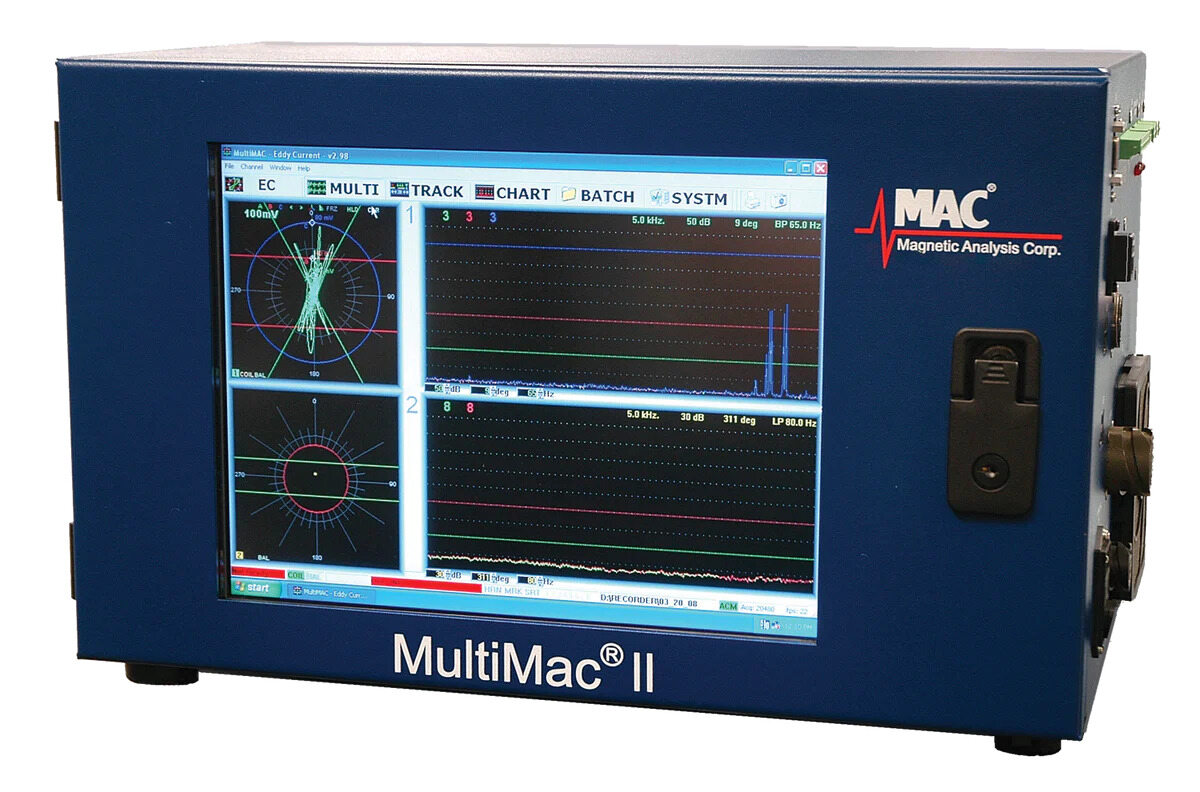
描述 管材、棒材和线材缺陷检测涡流探伤仪,可连接穿过式线圈、扇形线圈或旋转头 MultiMac SM 仪器特点 可同时连接穿过是线圈和/或旋转式探头 差动式和/或绝对式运行 最多 2 个独立的检测通道 每个通道的检测频率可选,频率范围:1 KHz - 5 MHz 可存储并调用设置,打印或传输检测数据 可同时显示阻抗图和带状图 多样的闸门选择(单弦型、双弦型、扇形及全相位) 增强的信噪比 MultiMac SM 应用 检测管材、棒材、线材表面和近表面短小缺陷 检测冷拔线材或定尺棒材的裂缝类表面缺陷或折叠 检测磁性或非磁性线材、棒材或管材 检测焊管焊缝区域内外表面短小缺陷 检测界面均匀材料,如方形、矩形、六角形和圆形 检测单股或多股绝缘线或电缆的连续性如断股和焊点 配合绝对通道,可检测长的开焊或磁性夹杂 在线检测连续线材 检测零件,如小轴和轴承的表面纵向缺陷 MultiMac® II SM 管材、棒材和线材缺陷检测涡流探伤仪,可连接穿过式线圈、扇形线圈或旋转头 检测技术 涡流检测技术 MAC® 的涡流检测 (ECT) 系统包含基于计算机的检测仪器以及两种 ECT技术的检测探头:穿过式和扇形探头,旋转式探头。 查看更多 下载产品手册 相关产品 Nothing Found
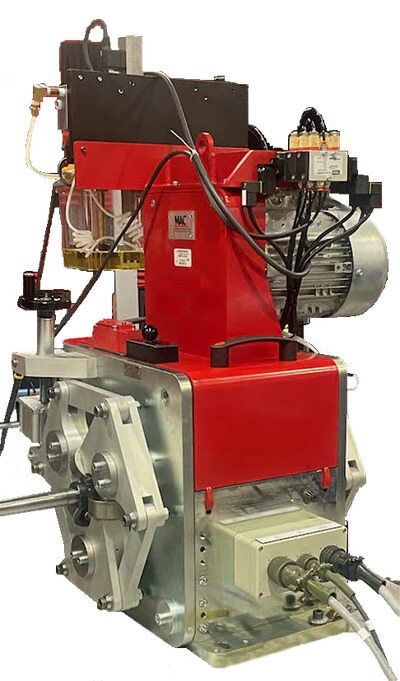
描述 ROTOMAC® 涡流旋转头 用于检测管材和棒材裂缝类缺陷的涡流旋转头装置 MAC 的旋转头利用涡流旋转探头技术的特性,检测长而连续的表面缺陷,这类缺陷使用穿过式线圈通常无法检测到。 与 MultiMac® II 涡流仪器配合使用。 系统可配备两个、四个或六个探头,每个探头都有独立的通道。 精确的距离补偿保证了缺陷信号的一致性,即使对于偏心或不圆的材料。 根据表面状态、尺寸和检测规范的不同,对探头进行接触式或非接触式配置。 具备探头盘旋转快速停止的安装保护装置。 与穿过式检测探头不同,旋转头不会因生产线速度的改变而受影响。因为探头以一个固定的速度围绕被检材料不断地旋转。 在棒材或线材中依照缺陷自动产品缺陷信号,激活报警、打标和其他装置。 检测直径 3mm 至 180mm 的磁性材料和非磁性材料。 检测裂缝类缺陷的首选方法 MultiMac® II 涡流检测仪器为旋转头提供控制、处理和分析。需要时 MultiMac® II 还可以为穿过式探头分配通道用于检测短小的、不连续的缺陷。与旋转头配合使用进行联合探伤。 ROTOMAC® 25RM 低速旋转头 低成本涡流旋转头,适用于检测线材和杆材 Rotomac® 25RM 是 MAC 最新一代涡流旋转头产品。配合我们的 Minimac® II 涡流仪器,它可以实现对线材、杆材和厚壁管材表面纵向缺陷可靠的检测,检测直径范围 3-25mm。 设计用于冷镦机运行、弹簧制造、支撑杆制造等其他低速生产线应用。 运转速度 1,000 转/分。 最大检测线速度 12 米/分。 使用带有距离补偿功能的绝对式探头,可检测不太圆的产品。 在检测过程中使用导套对产品进行居中。 全新非接触式探头臂设计可以实现方便、快捷的探头调整。 标准单相交流电供电。 ROTOMAC® 20mm 高速旋转头 小直径线材、杆材和管材纵向缺陷高速检测 最高运转速度 18,000 转/分,实现较高检测线速度。 卓越的高灵敏度非接触式检测。 全新改进的简单易用的距离补偿(检测卵形线材的关键因素)。 简单的尺寸调节工具,并带有尺寸刻度盘。 更换尺寸时,两个旋转探头可同时调节。 快捷方便的“旋转安装”导套架。 探头的旋转中心与产品的中心线可方便地居中。 探头更换简单。 满足其他适用的安全要求。 20mm Rotomac® HS 高速旋转头实现了连续线材运行的高速涡流检测,如拉拔线、弹簧制造、零件成型及切断等。系统设计用于检测直径范围 2 至 20mm (0.0787-0.7874”)的小尺寸产品的表面纵向缺陷,如裂缝和折叠等。 [...]
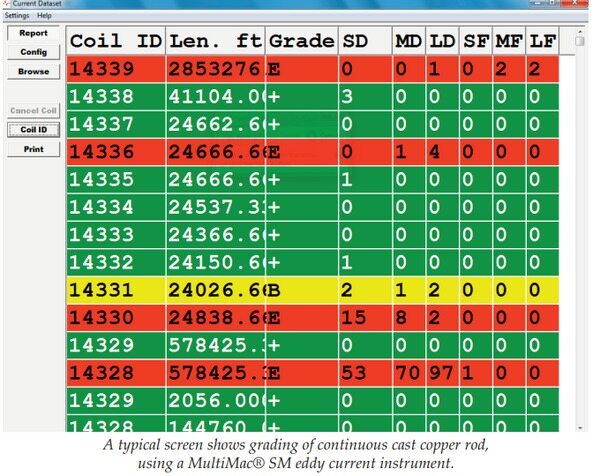
描述 根据用户配置的质量等级,在生产时对 杆材 & 线材的每段或整卷进行分级 MAC 的分级软件选项可在金属线材,杆材和棒材生产时自动地将每段或整卷产品按照用户配置的质量标准进行方便,高效地分级。配合 Multimac® II 或 Minimac® II 涡流检测仪器,客户可为不同的缺陷类型设置不同的闸门,为每个质量等级指定最大缺陷数量,以及配置检测报告等。系统可对产品表面缺陷以及内部夹杂进行检测和分类。 与 Multimac® II 或 Minimac® II 涡流检测仪器配合使用 根据产品给定分段或整卷中的表面缺陷和夹杂的数量和类型评价被检产品 客户为每个质量等级指定缺陷信号的最大数量和类型,以及显示的颜色 每种类型的缺陷由仪器中的一个特定的闸门进行检测,并独立计数(最多 24 个闸门) 在每班或每天结束时,每卷的分级数据可生成报告 将每卷标记一个特定的卷号和质量等级 分段长度可设置为公制或英制 报告包括卷号,质量等级,日期,时间,生产线名称,检测仪器名称,以及每个指定类型缺陷的总数,报告为 CSV 格式文件,可与客户的数据库轻松交互。支持多种语言 每卷检测完成后可自动打印每卷的报告标签 也可手动打印客户选择的数据,如当前班组检测的卷号,配置,数量,等级和检出的缺陷类型 质量分级软件 用于评定线材,杆材和/或棒材质量等级 检测技术 涡流检测技术 MAC ® 的涡流检测 (ECT) 系统包含基于计算机的检测仪器以及两种 ECT技术的检测探头:穿过式和扇形探头,旋转式探头。 查看更多 下载产品手册 Nothing Found